
The Daily Market Forecast... a HUGE gift for you
Today’s Lesson: How to REALLY learn.
If you could learn anything faster and better would you invest 11 minutes to learn how?
This “gift” you now have access to is truly a life-changer. I know, you’ve heard that phrase “life-changer” or “game-changer” so often it’s probably falling on deaf ears. Give it one more chance. Watch this 11-minute video. The impact on my trading and my life in general was huge. That’s why I want to share it with everyone. Click here for free access.
Trade Well,
Mike Siewruk
P.S. Join us every Saturday morning @ 10:00 ET for our weekly LookBack (5) trade review session. Every trade for the week is analyzed. Now open to the public. Meet the team. Ask questions. Register here.
The Daily Market Forecast... the re-focus hack
Today’s Lesson: Re-focus
Novice traders focus on how much they are winning and losing. Every entry, hoping for a winner. Every stopped exit, wishing it didn’t happen. This is incredibly destructive behavior. You’re teasing your emotions, begging them to overrule your common sense.
Here’s how to stop:
- You have a rule-based trade plan (if not, get one or quit trading).
- You’ve been documenting every trade opportunity including the trades you didn’t take.
- Your database of evidence is rich, hundreds of trades, maybe thousands.
- You know the win/loss percentage of your strategy.
- You know the average winning and losing trade in dollars.
- Calculate the net gain and divide by the total number of trades.
Now you know the amount of money you make every time you click to enter regardless of outcome. That is what your mind should be focused on when a trade setup triggers. Not winning or losing. But knowing with statistical relevance that over the long haul your strategy earns $X per trad...
The Daily Market Forecast... stop placement
Today’s Lesson: Honing your stop placement.
Stops are mandatory orders for risk management. The big question is where to place them. Before we explore different methods, understand that per-trade risk is controlled as much by your position size as your stop placement. Wide stop = less quantity (shares, contracts). Tight stop = more quantity.
Using a fixed percentage formula solves the sizing question. Assuming your account is $10,000, your percentage risk per trade is 2%, your max loss is $200. Now divide that by the stop width and you have position size. Easy enough.
Here is a sample of some popular stop loss placement methods:
- Multiplier of Average True Range (ATR) based on the chart time interval used for entry/exit. The rationale is if your stop is just beyond 1 ATR away then you likely won’t fill it more than half the time.
- Prior candle low plus a few ticks. This also considers the current volatility. Entering when the prior candle is narrow suggests a bigger stop is not re ...
The Daily Market Forecast... diversify
Today’s Lesson: How to smooth your equity curve.
It’s natural for investors to diversify among different assets, sectors, stocks and funds. Traders should gain the same risk management edge by trading multiple strategies. If thoughtfully combined the combination can smooth your equity curve and increase your confidence.
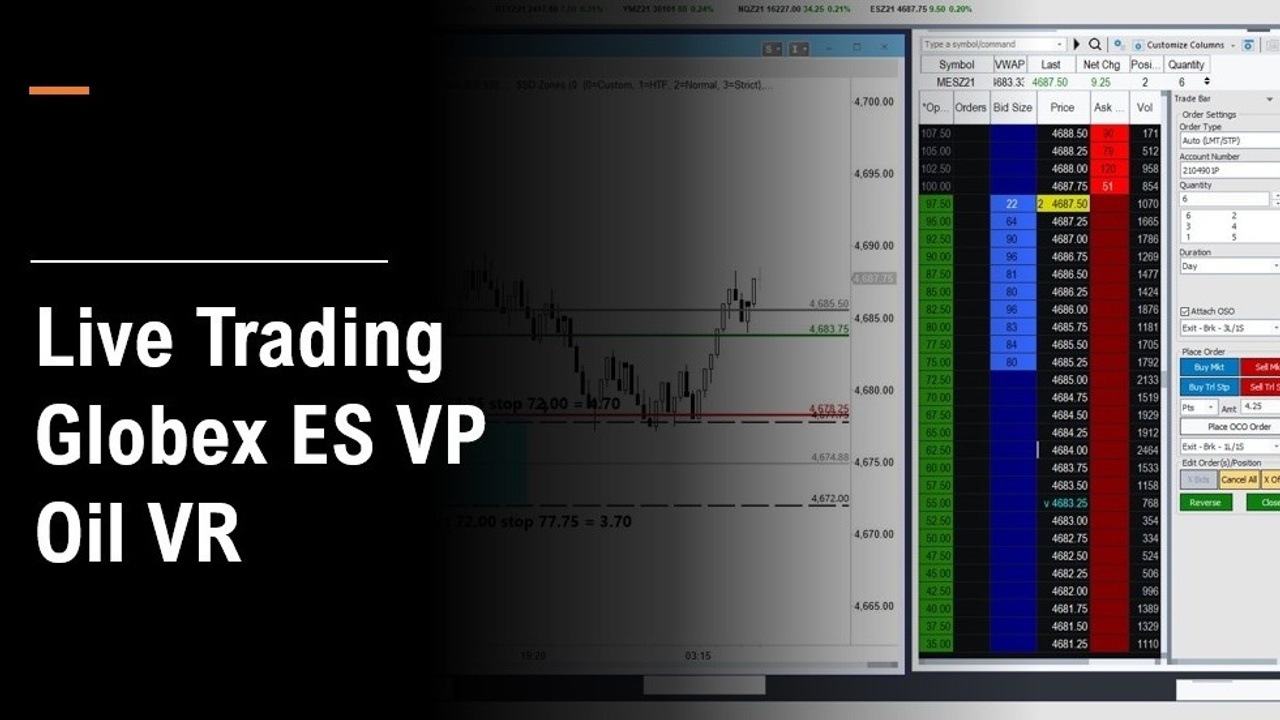
While last week was a record week collectively for our strategies in the trading room, yesterday was mixed. Our S&P volume levels failed in the day session.
Our volatility reversal strategy made up for it. Watch this 8-minute live trading video to understand more about diversifying trading strategies. Click here.
Trade Well,
Mike Siewruk
P.S. Join us every Saturday morning @ 10:00 ET for our weekly LookBack (5) trade review session. Every trade for the week is analyzed. Now open to the public. Meet the team. Ask questions. Register here.
The Daily Market Forecast... Lesson Day
Today’s Lesson: You can’t win every day.
Last week our strategies had a record week. To be fair, it’s highly unlikely that anyone on the team duplicated that performance. But the “baseline” for the rules followed did have a monster week.
Price moves in waves of impulses and corrections. Your trading account is likely to do the same thing. There is no logical reason to assume this week will be the same as last week. Or, that it will be a losing week giving back some of the gains. We just don’t know.
Your viewpoint every day (week, month) should be positive. There is no benefit in thinking negative. The gravy train ends when it ends. It’s important to maintain the positive outlook BUT understand that a losing streak, which will happen, is not bad. It’s just temporary… assuming your rule set has edge.
For a review of each of those trades watch the video of Saturday’s LookBack (5) session. Click here.
Trade Well,
Mike Siewruk
P.S. Join us every Saturday morning @ 10:00 ET for our we...
The Daily Market Forecast... compartmentalization
Today’s Lesson: Compartmentalization (a mouthful of a word but the best I could find for this topic).
Here’s the setup: you have a 401-K (long only) and you trade short term for income (long and short). Every morning you go through your routine which includes assessing two time horizons:
- The big picture. Trends on monthly and weekly charts. You WANT these up for your 401-K.
- Today. Will it be a narrow or wide day? Up or down? What catalysts are evident? You don’t care about direction, just movement.
Do you see the challenge? For your bigger account you WANT the market to continue higher. For your trading account you’re willing to trade short, AGAINST what you really WANT.
You may not realize but you could have a confidence issue with your short-term trading. You’re in conflict. Heck, in a Bear Market your confidence issue switches to your investment account!
Think about this while trading short. If you have any angst then knowing the cause (your WANT) is the first step to “rec...
The Daily Market Forecast... failure teaches
Today’s Lesson: Failure teaches.
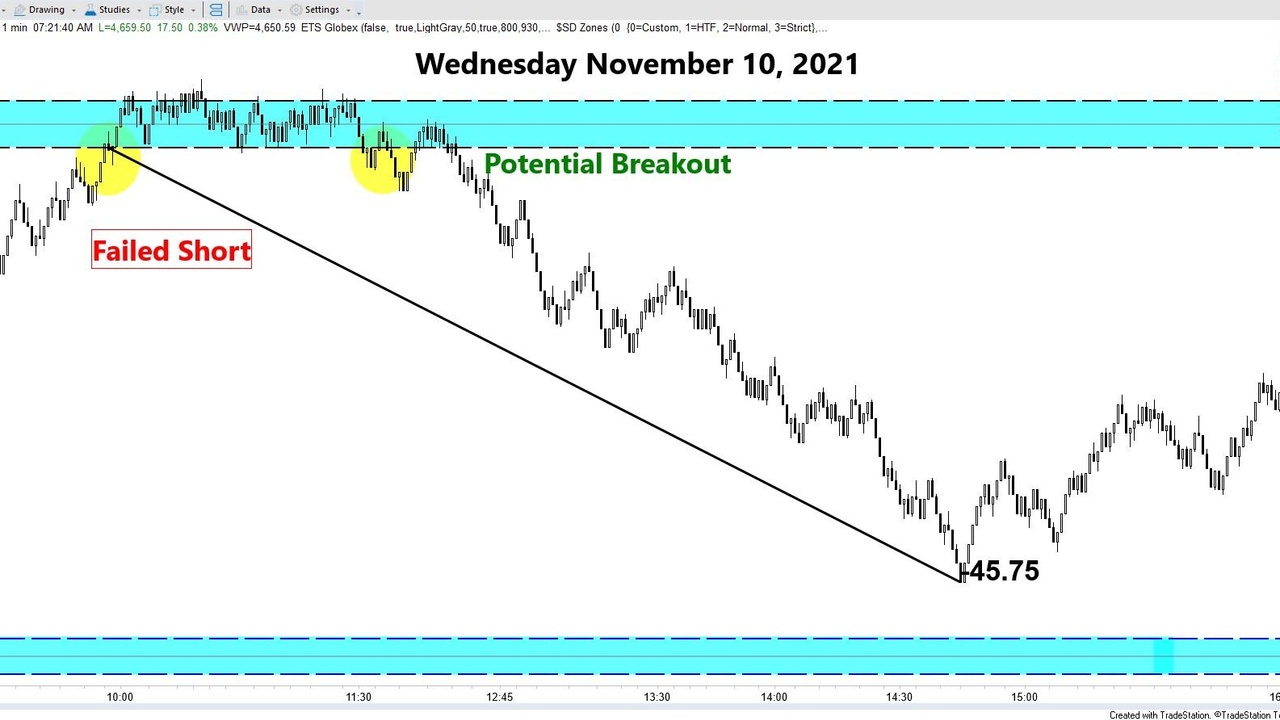
Yesterday’s short trade stopped out only 1.5 points from the day session high. Price then plummeted 45+ points. Instead of a solid payday you paid out. Are you upset? Critical? Sad?
Having a positive attitude about your trading is important. Banish those negative thoughts and blame. Reframe the results of a trade like this one to the positive.
Let’s review the trade plan from yesterday. The Long Level was down at 4619.75. The comment following the long suggestion was “That’s a long way down and unlikely today, but what does that tell you about the short suggested above?”
Did the short level work out? Did the vast distance to the next level almost get filled? Was it a great short entry? Yes, yes, yes.
The fact that you missed the run by a small margin doesn’t negate a well-planned trade. Instead of fostering negative emotions about this result focus on the positive. Learn from the failure. What could you do differently the next time?
One obvious a...
The Daily Market Forecast... tops and bottoms

Today’s Lesson: Breakout rules.
Since the winning short yesterday was a 25-point breakout trade (see chart), it’s timely to review rules of entry. You may be using different rules that are working for you. Stay the course. There is no “one and only way” to beat the market. The key is to find a strategy and style that is in harmony with your personality and time commitment.
The rules followed by the team here are simple and very effective for avoiding the “Fakeout” breakouts. We do miss a few because it’s a more conservative entry, but the stats over thousands of trades assure you the results are much better.
Here was the trade suggestion yesterday: “Short Level: If price closes BELOW 4693.25 short the retracement back there with a stop at 4698.75 (5.50 risk).”
Notice that the breakout was not taken simply because price TRADED below the level. A 2-point range candle (or 2-minute, tick or volume) had to CLOSE below. The short entry was then placed above at the limit entry price. This...
The Daily Market Forecast... winning streaks
Today’s Lesson: Call it a day?
How many wins in a row do you take before you quit? Since our strategies had a healthy 11 winners in a row yesterday this is a timely question.
Before we figure this out you should know that it is highly unlikely that you’ll duplicate the exact results of any strategy. There are trades you’ll miss, fills you won’t get, technology glitches, etc. When you hear or read about extreme success, please dial down your expectations of reality.
Even if you’re a seasoned trader with years of experience, winning trade after trade can really get your adrenaline flowing. It’s physiological. You just can’t stop it. This can lead to over confidence and poor judgement. You should have a rule in your plan.
There are a few schools of thought on when to quit a winning streak. All these philosophies are used by different traders on our team. Pick one that fits your personality.
- Set a dollar amount as your daily goal and quit when you reach it. This might be someone tra ...
The Daily Market Forecast... sleep trading

Today’s Lesson: Sleep trading.
The futures market opens at 6:00 PM ET. It’s called the Globex session and it is easier money than the day session. Why? The participants are different. Day session volume brings out all the big position traders and that creates a noisy effect on price action. Here’s 5 compelling reasons why you should take on this “night job…”
- The Globex session is less noisy meaning your stops will be filled less often.
- The best W/L ratio and highest profit time periods are from 18:00 to 9:30 ET. You can trade until noon, but the results will be less profitable.
- Breakout trades in the first 30 minutes of the Globex are incredible. Reversals are not.
- There are 10 “sessions” every week. 5 during the day, 5 Globex. Of those 10, the TOP 4 profit-wise are Globex.
- You can set/forget your trades before you retire for the night.
If you’re thinking “I don’t have the time to analyze the market and KNOW where to place those Globex trades” then you’re in luck. We provide...